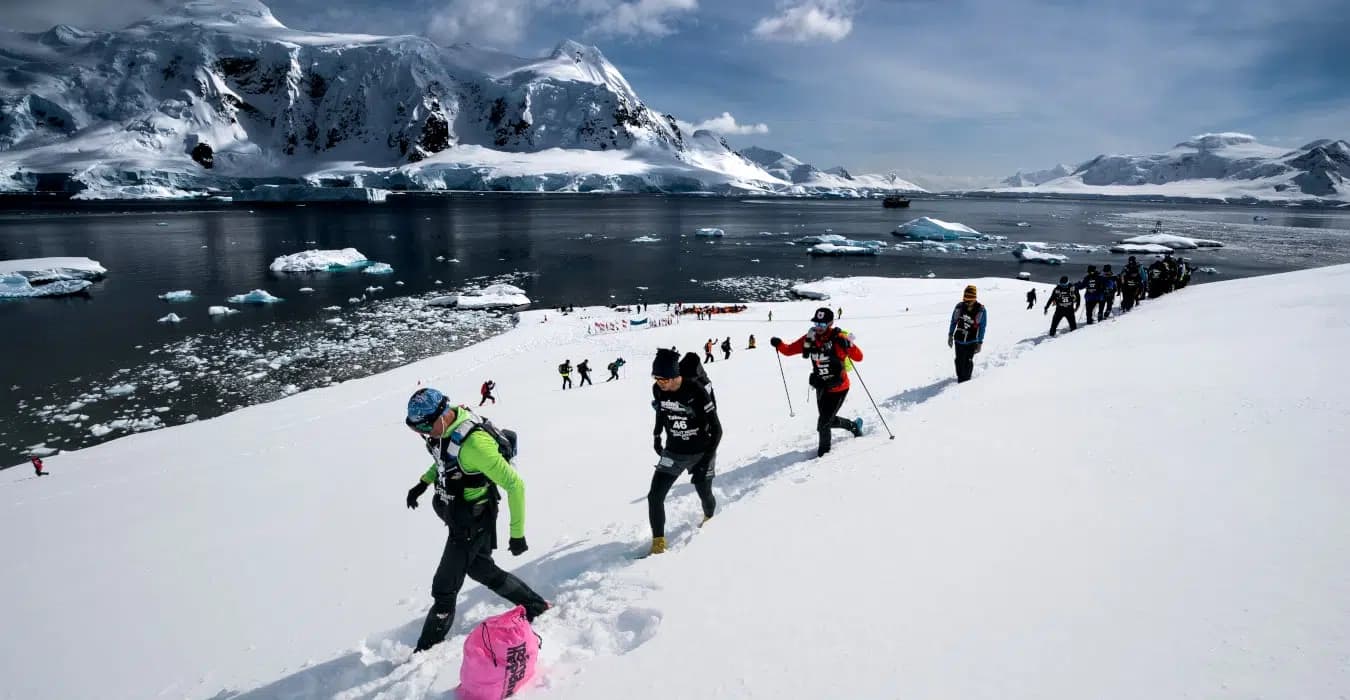
The coldest races on earth demand the most specific preparation.
Iditarod Trail Invitational. Montane Arctic. Rovaniemi 150. We are building the world's first network of race-finisher coaches for snow and arctic ultra racing. Be first to know when we launch.
Arctic racing operates in a category of its own.
Nothing in conventional endurance sport prepares you for racing in sustained sub-zero temperatures across snow and ice. The physiological demands are unlike anything in road, trail, or desert racing — and the consequences of being underprepared are not just a bad race. In arctic conditions, they can be genuinely dangerous.
Cold alone changes the game completely. Your cardiovascular system works differently. Calorie burn accelerates dramatically — elite arctic racers consume 6,000–10,000 calories per day. The layering system that keeps you alive at rest can cause overheating at effort, and getting it wrong leads to sweat accumulation that turns life-threatening when you stop. These are not details you learn on race day.
The equipment demands are unlike any other race category. Mandatory kit lists are long and specific. Bivouac systems, sled management, and the ability to execute fine motor tasks with frozen hands — even setting up a stove at minus 30°C — are technical skills that require practice in conditions you cannot simulate at home.
And then there is sleep deprivation management at scale. Arctic races often involve 100 to 300+ miles of continuous effort, with athletes managing sleep in two to four hour blocks over multiple days. The cognitive and physical degradation that accumulates is not something fitness alone can counter. It has to be specifically trained.
Four demands no other race category prepares you for.
Cold management
Sustained effort in conditions from minus 10°C to minus 40°C requires layering systems, thermal management strategies, and the physiological adaptations that only come from deliberate cold exposure training — not just fitness.
Sled and kit management
Arctic races require hauling mandatory kit in a pulk or vest. The weight, the drag on snow, and the added effort compounds over days. Training with the actual equipment and load from early in the cycle is non-negotiable.
Calorie strategy
Calorie demands in arctic racing are three to four times that of a road marathon per day. Eating enough — in cold that suppresses appetite, with food that freezes — is one of the primary race management challenges. It requires a specific fuelling approach built into training from day one.
Sleep deprivation management
Multi-day arctic races involve sustained effort across multiple days with minimal sleep. The decision-making, motor skill, and physical degradation this produces requires deliberate preparation — including training sessions designed to replicate it.
Underprepared athletes do not just have bad races in the arctic. They have dangerous ones.
The stakes are higher than any other race category.
In desert racing, a bad day costs you time and discomfort. In arctic racing, exposure, hypothermia, frostbite, and navigation failures in whiteout conditions are real risks. The margin for error is compressed by conditions that do not care about your fitness or your determination.
Experience in other disciplines does not transfer the way people expect.
Ultra runners with strong desert or trail credentials regularly arrive at their first arctic race badly underprepared — not because they are not fit, but because the specific demands of cold, equipment, and sleep management are an entirely new discipline. Prior endurance experience is an asset. It is not a substitute for arctic-specific preparation.
Finding a coach who has actually done these races is almost impossible.
Arctic ultras attract a small, specialist field. Coaches who have not only finished these races but understand what preparation actually works are exceptionally rare. That is the gap we are building to close — and why we are being careful about which coaches we bring into the network.
We are building the coaching network these races deserve.
Be part of this from the start.
Whether you are an athlete preparing for your first arctic race or a finisher who wants to help others prepare properly — we want to hear from you.
Join the athlete waiting list.
We are onboarding arctic and snow race coaches now. Be first to access race-specific plans and coaching when we launch — and we will be in touch as soon as we have a coach matched to your race.
Are you an arctic or snow race finisher?
We only work with coaches who have finished the races they coach. If you have completed an arctic or snow ultra and want to help other athletes prepare properly, we want to hear from you.