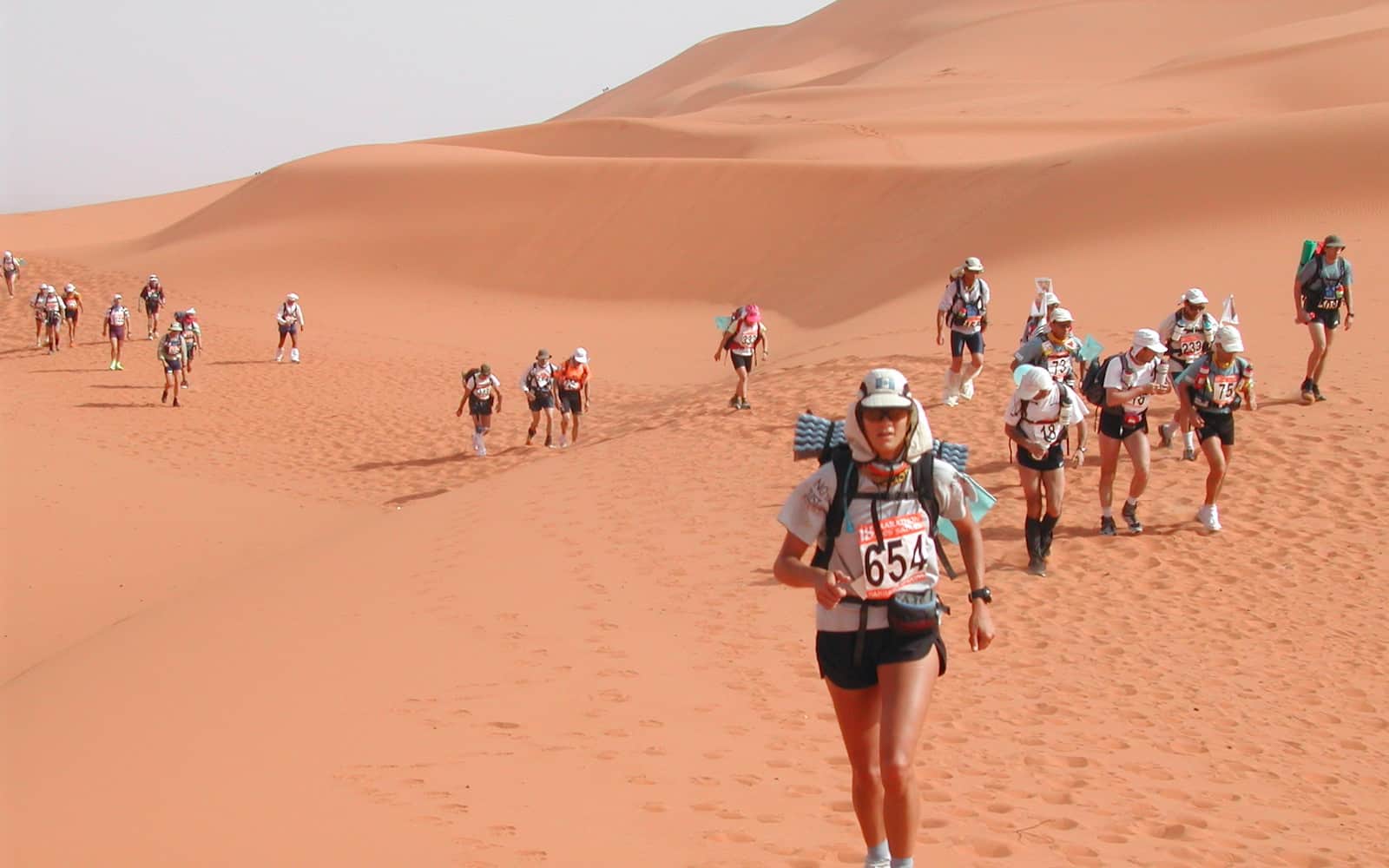
This is not road running with sand.
Marathon des Sables. Sahara Race. MIUT. Desert stage races are a completely different discipline — and most people who arrive underprepared found that out the hard way.
Desert racing breaks road runners in ways they do not expect.
Most competitors arrive having run a marathon, maybe a 50km. They are fit. They have done the miles. And they still struggle — not because they were not working hard enough, but because desert racing demands things that no road training develops.
Heat changes everything. Running in 40°C forces a pace and effort recalibration that you cannot simulate on a treadmill or in a British winter. Your aerobic system, hydration strategy, and even your pacing instincts need to be rebuilt around heat.
Self-sufficiency adds a layer that does not exist anywhere else in running. You are carrying a pack — every day, for multiple days. The pack changes your biomechanics, loads your hips and shoulders, and adds fatigue that compounds through the week. Road runners have no reference point for what that actually costs.
And then there is consecutive-day fatigue. Running 30–40km on tired legs, with a heavier pack, in heat, with degraded sleep — it is a skill set in itself. One long run a week does not train that. Back-to-back training does.
Four demands road running never prepares you for.
Heat management
Sustained effort in 35–45°C environments requires dedicated heat adaptation — not just fitness. Sweat rate, sodium loss, and pacing in heat are all trainable, but only if your plan builds them in.
Pack carrying
A mandatory 6–10kg pack changes everything: your gait, your joint loading, your effort at the same speed. Training with a loaded pack from early on is non-negotiable — it cannot be addressed in the last two weeks.
Consecutive-day fatigue
Multi-stage races are won and lost on day three and four, not day one. Training your legs to perform on pre-accumulated fatigue requires structured back-to-back sessions that almost no road plan includes.
Terrain and navigation
Sand, rock, dune climbing, and mixed desert surfaces use muscles that road and trail running leave underdeveloped. Foot placement, ankle stability, and energy economy on soft ground are all specific adaptations.
Every year, well-prepared runners have very bad weeks.
The DNF rate is higher than people expect.
MDS alone sees 5–10% of starters drop out each year — and this is not a race that attracts casual entrants. These are experienced endurance athletes who underestimated the specific demands, or prepared with a plan that was not built for this kind of event.
Arriving fit is not the same as arriving ready.
Fitness is a necessary condition, not a sufficient one. A runner with a 3:30 marathon time and a generic ultra plan will frequently struggle more than a slower runner who trained with heat exposure, back-to-back sessions, and pack work baked in from week one.
The cost of getting it wrong is enormous.
Entry fees are typically £800–£3,000. Add flights, accommodation, kit, travel insurance, and months of preparation time. The investment in a race-specific plan is the cheapest insurance you can buy against arriving at the start line underprepared for what is actually waiting.
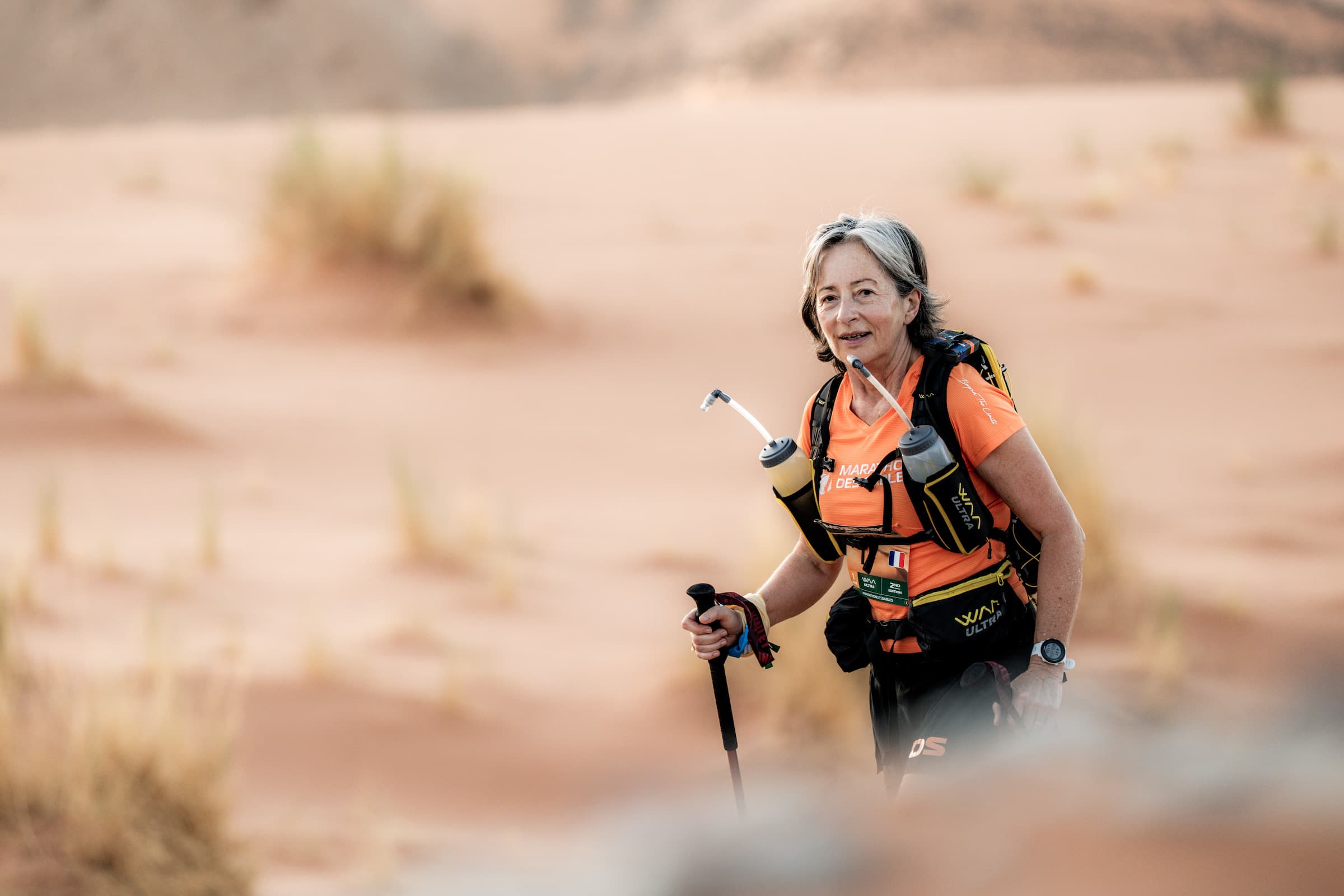
The preparation has to match the race. Not a generic version of it.
One race. Or something bigger.
Where you are in your desert racing journey changes what you need right now. Tell us where you are, and we will point you in the right direction.
I have a specific race in mind.
You know which race you are targeting — or you are close to deciding. You want to understand what that race requires and get a structured plan that is built for it.
Not sure yet? The assessment will identify the single best next desert race for your experience level and constraints. Or browse all desert race training programs directly.
I am working towards a bigger goal.
You have a target — MDS, Sahara Race, a 250km stage race — and you want a structured path to get there. Not just the next step, but the whole progression mapped out.
The roadmap tool builds the full race progression from where you are now to your goal race — with the stepping stones, timelines, and training phase logic mapped out.
Build My Desert Race Roadmap →