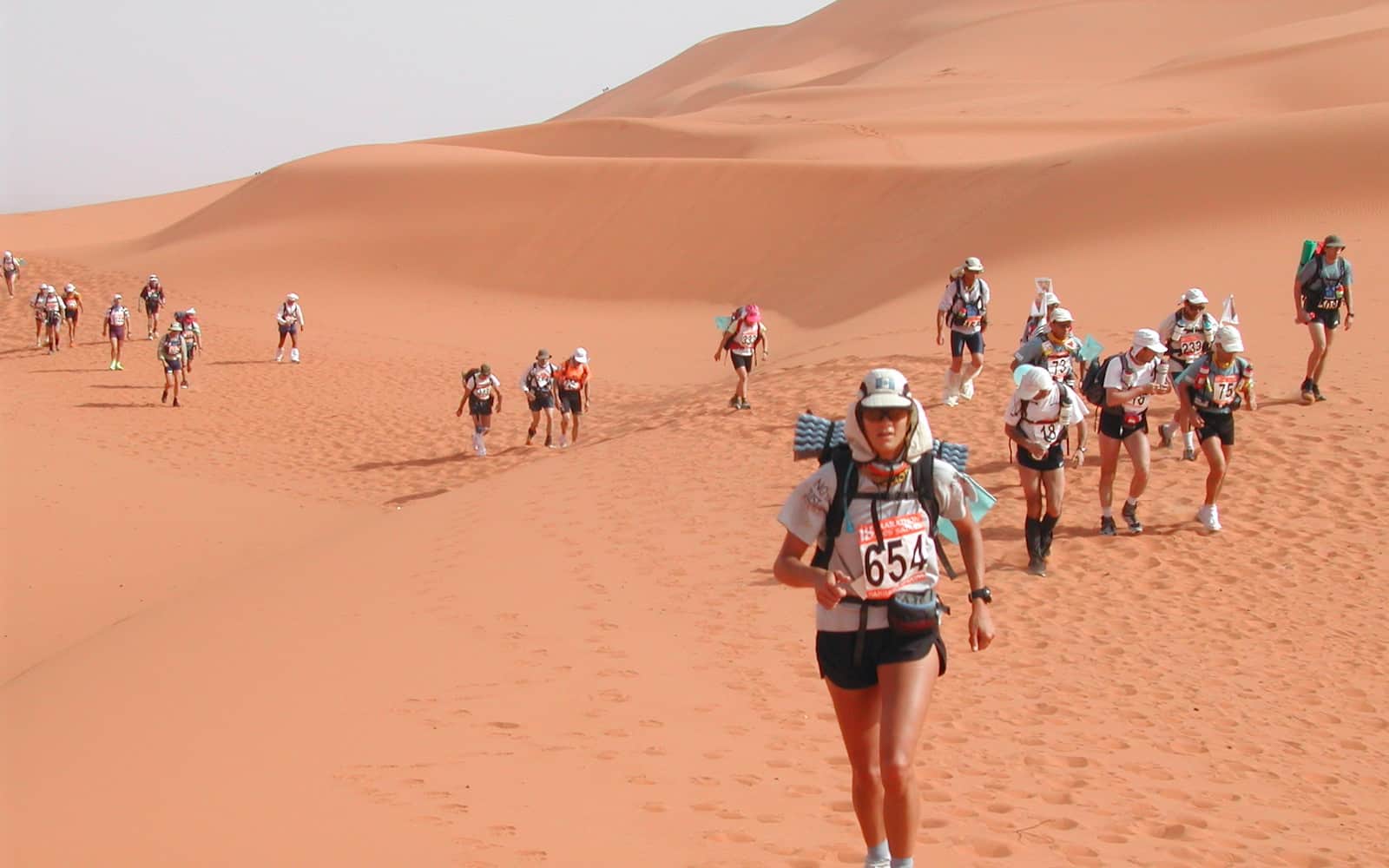
Understand the race before you train for it
MDS is not just a longer ultramarathon. It is heat, sand, pack weight, self-sufficiency, foot management, and repeated stages all at once.
Use this hub to learn what the race asks of you, hear from athletes, understand the DNF risks, and decide whether your next step should be the MDS roadmap.
A multi-day desert race where preparation has to be specific
Marathon des Sables is a self-sufficient, multi-stage desert race held in the Moroccan Sahara. Athletes carry their own food and mandatory kit, sleep in open bivouac conditions, and return to the start line day after day while heat, terrain, and fatigue compound.
The distance matters, but the format matters more. MDS rewards athletes who have rehearsed heat adaptation, pack carrying, foot care, sand movement, nutrition, and the emotional reality of waking up tired and going again.
~250km
Total distance
across 6 stages over 7 days
up to 50°C
Daytime heat
dropping near 0°C at night
10kg+
Mandatory pack
carried on every stage, back to back
~80km
The long stage
a single continuous effort, often overnight
MDS athlete reviews are coming soon
We are building this section around the practical details future entrants ask about most: organisation, terrain, and what actually helped athletes prepare.
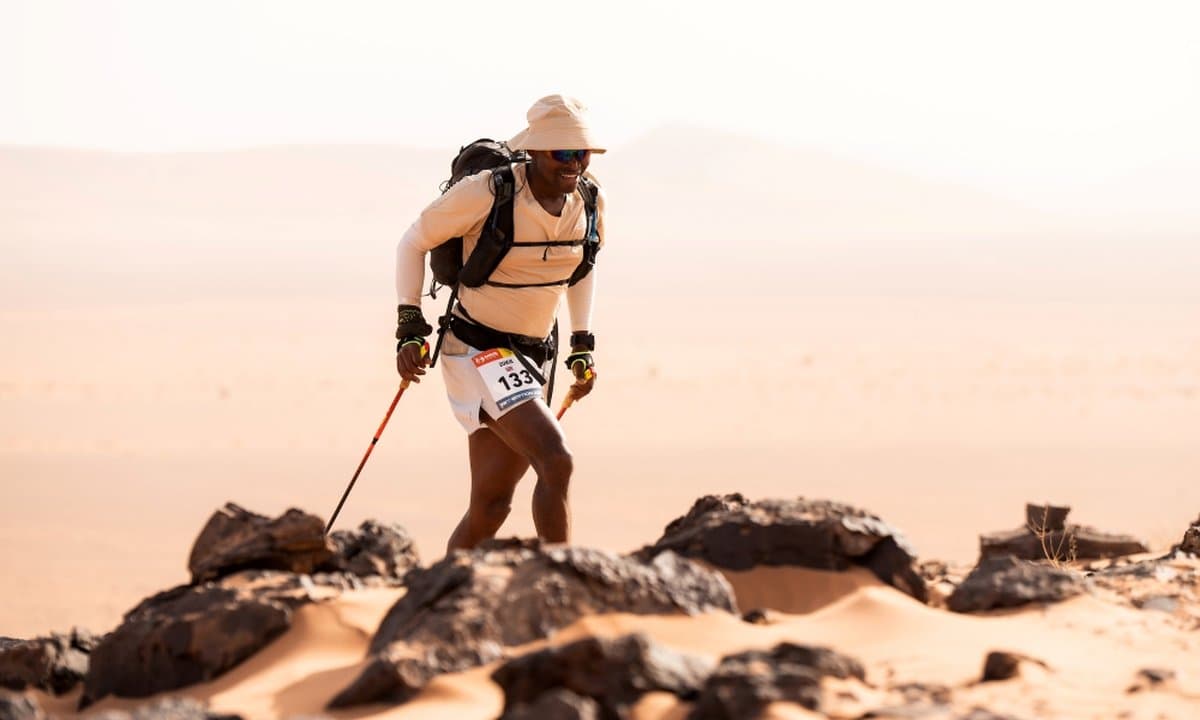
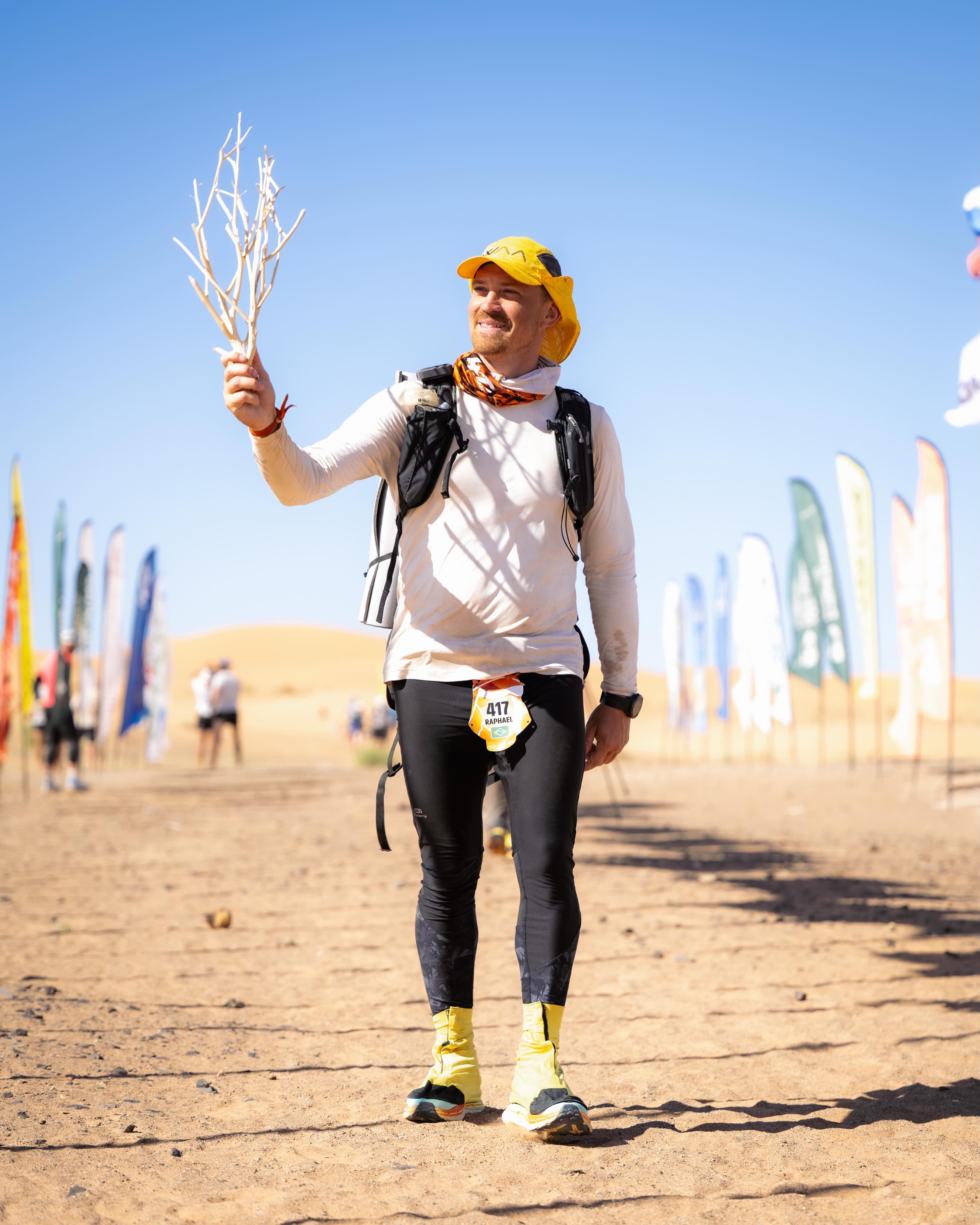
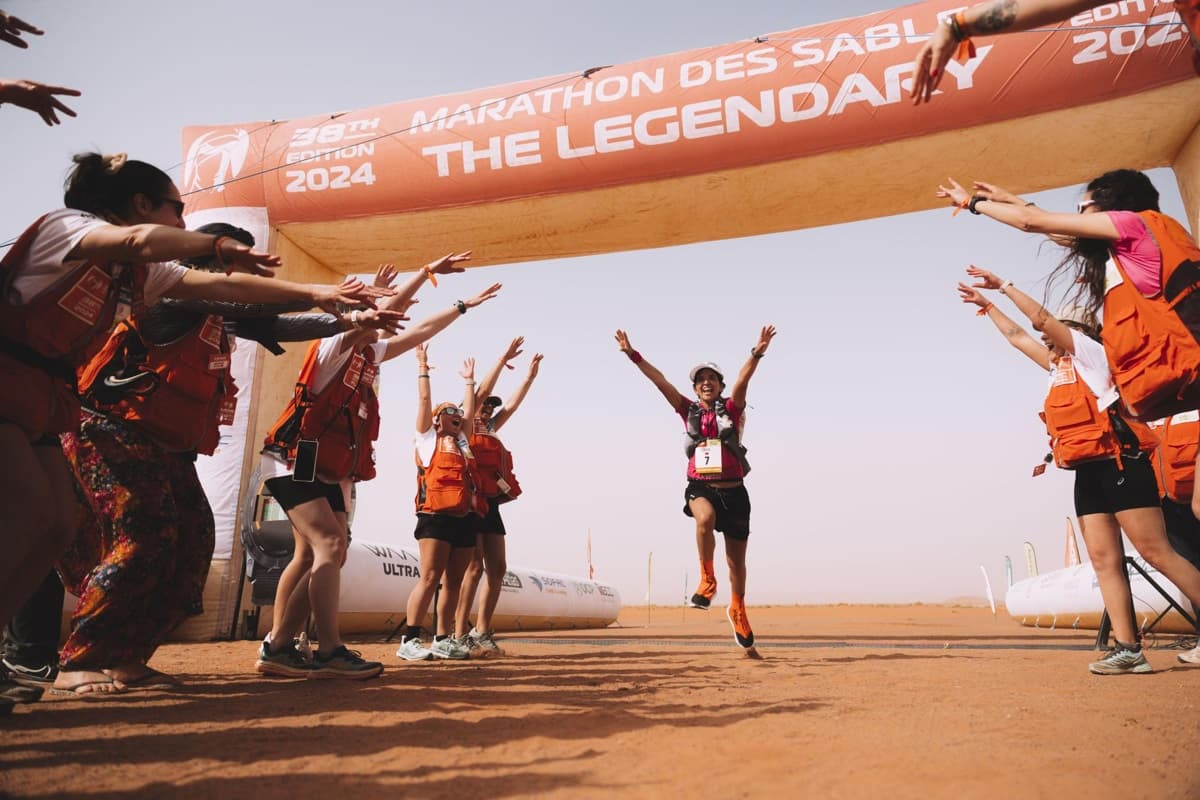
The demands MDS will test
These demand areas mirror the columns used in the race demand assignment tool. A strong MDS build does not treat them as separate boxes; it teaches you how they stack together under stress.
Foundation Fitness
The aerobic base and durable legs needed before the race-specific work can hold.
Ultra Distance
Long efforts, steady fuelling, and the ability to keep moving when comfort has gone.
Night Running
Confidence with fatigue, low light, navigation cues, and slower decision-making.
Pack Training
Carrying race-weight kit until shoulders, hips, back, and feet stop treating it as a surprise.
Multi-Day Racing
The skill of starting again tomorrow when today already took something from you.
Sand Training
Technique, rhythm, foot placement, and patience on a surface that takes energy without giving much back.
MDS-Specific
The combined hit of bivouac life, self-sufficiency, heat, sand, pack load, and repeated stages.
Heat Adaptation
Physiological preparation for high thermal stress, higher sweat rates, and stricter pacing discipline.
DNF reality
5.5-29.6%
Recent editions show that the DNF rate can swing sharply by year. The lesson is simple: MDS attracts experienced endurance athletes, but the race still exposes gaps in heat management, foot care, fuelling, and multi-day resilience.
| Year | DNF rate |
|---|---|
| 2026 | 5.9% |
| 2025 | 5.5% |
| 2024 | 7.2% |
| 2023 | 29.6% |
| 2022 | 11.6% |
Popular DNF causes are usually preparation problems
Foot damage: blisters, maceration, sand rash, and unmanaged hot spots.
Heat illness: core temperature, dehydration, electrolyte mistakes, and pacing too hard too early.
Gastrointestinal failure: not being able to absorb enough calories or fluids across repeated days.
Pack and kit problems: shoulder pain, rubbing, poor weight distribution, and untested mandatory kit.
Accumulated fatigue: the mental and physical drop that appears once one hard day becomes several.

Find out where you stand before MDS finds the gap for you
The roadmap helps you understand which stepping-stone races and demand areas you need next, based on where you are now and what MDS will require later.
Use the MDS Roadmap